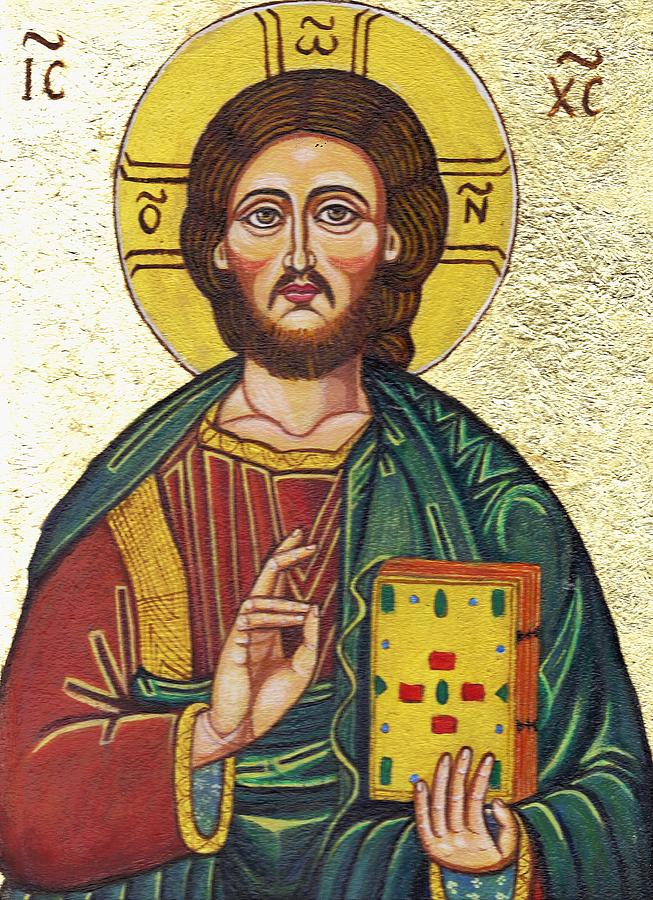
An icon is a work of art, typically of religious nature; Religious icons are works of art based on people with biblical and historical significance.

H I A R T S T O R Y Iconophiles vs Iconoclasm
Icon of the crucifixion, probably constantinople or thessaloniki, first half of 14th century, tempera and gold on wood, athens, byzantine and christian museum.
Examples of religious icons. The statue of liberty symbolizes freedom. In such instances, the simple forms of nature may sometimes be depicted in a. Statues act as a visual aid for.
Peter is shown at left. The khanda is made up of three important symbols; Choose your favorite religious icon designs and purchase them as wall art,.
Ranging from christ, the virgin mary, saints, or angels. Diverse media although todays icons are most closely identified with wooden panel painting, in byzantium they could be painted (or sculpted in shallow relief) from a wide variety of media, such as marble, ivory, mosaic, gemstone, precious metal, enamel, or fresco painting.early icon painters tended to use encaustic paint, which employs hot beeswax as a. A pastor behind a pulpit, a bible teacher, and a loving family.
The khanda is the symbol of sikhism. Derived from the greek word eikōn, meaning 'image.' the most common icons are of religious figures: Religious symbols are used to convey concepts concerned with humanity’s relationship to the sacred or holy (e.g., the cross in christianity) and also to the social and material world (e.g., the dharmachakra, or wheel of the law, of buddhism).
Many religious homes in russia, for example, have icons hanging on the wall. Plants bound into a wreath symbolically promise victory over death and the joys of heaven. In films, the western genre would include icons like the cowboy hat, saloons, and spurs.
Home to tibetan buddhist monks and a destination for pilgrims and seekers of all faiths and cultures, paro taktsang is surely one of the most impressive examples of religious architecture in the world. An interesting aspect of catholic icons is that almost everything on the icon has some sort of symbolic meaning. One was of a young, idealized and clean shaven hero type.
Christian symbol of the crucifix. For example, a statue of jesus on the cross can help us remember the sacrifice of jesus. Star of bethlehem, day of pentecost, and dove for noah’s ark with a leaf in its mouth.
Above him are circular ikons of st. The chakkar represents that god has no beginning or end. The 66 religious symbols the va will put on tombstones.
Other nonreligious types of symbols achieved increasing significance in the 19th and 20th centuries, especially those dealing with human. In early christian times there were two images of christ that were more or less standardized. John, christ and the virgin.
I think photography is a secular equivalent of icons used in today's world. A catholic icon is a representation of the image of such holy figures as the saints, mary, jesus and other religious figures, in the form of a painting. Painted and sculptured leaf, flower, and plant motifs decorate christian churches and many religious and funeral monuments.
The wood is a reminder of what life was like before the fall of adam and eve. Icons are often illuminated with a candle or jar of oil with a wick. It is found, for example, in representations of dionysus and christ.
The original meaning of the swastika meant literally to be good. An example of an early ikon of st. A growing plant for spiritual growth, a shepherd’s rod, and an offering plate.
All you have to do is establish that there is, indeed, a need for the icon, that the deceased sincerely held the. Most often the subjects of icons are the virgin mary, mother of jesus, or christ, or saints, or angels. The sri harmandir sahib is a central place of worship for the sikh religion.
Finally icons give people a sense of belief in both byzantine and modern day examples since both believe that the icons have protective powers, this is evident in how some people carry small icons like necklaces bearing an image of a holy figure to provide divine protection. From the colors used to paint the catholic icon to the way the subject is. Shop for religious icon wall art from the world's greatest living artists.
The cross has always been a symbol of christianity in religion. (beeswax for candles and olive oil for oil lamps are preferred because they burn very cleanly.) White silhouette of a crown of thorns.
A golden cross, a traditional church building, and a bible. Religious figures such as gods, saints, prophets, and martyrs are often immortalized in statues, which become icons to those who follow the faith with which they are associated. Some include more than one in the.
Divine beings are often depicted in human form in religious iconography, whereas demons or even spirits are portrayed as menacing animals. Anyone can request a new emblem of belief to be added to this list.
In orthodox christianity, icons are sacred works of art that provide inspiration and connect the worshipper with the spiritual world. Icons, that is images of holy persons, were an important part of the byzantine christian church from the 3rd century ce onwards.

Haghia Sophia Mosaic Detail The Byzantine Emperor
They are not even considered religious art, but because icons do present religious subjects they can be classified as religious art.

History of religious icons. Byzantine emperor leo iii (reigned 717. During the 10th century, the walls of russian monasteries were covered with votive and festival icons, and outer chapels featured wooden panels displaying the saints of the calendar. At the 2008 conference of the orthodox theological society […]
The term icon comes from the greek word eikōn which means “image.” religious icons are works of art based on people with biblical and historical significance. Icons have been called windows to heaven or doorways to the sacred. The first iconoclasm, as it is sometimes called, existed.
'image struggle', 'war on icons') were two periods in the history of the byzantine empire when the use of religious images or icons was opposed by religious and imperial authorities within the orthodox church and the temporal imperial hierarchy. Venerated in churches, public places, and private homes, they were often believed to have protective properties. Icon, in eastern christian tradition, a representation of sacred personages or events in mural painting, mosaic, or wood.
Iconoclasm (the movement to smash icons) started from within the church. On this sultry august day, the sun’s rays beat down on the cement steps that lead up to the monastery of the “most holy mother of god,” on the island of tínos, in the. In early christian and byzantine art from the university of pittsburgh, and is a leading expert on orthodox iconography.
Rather, they are sacred art because they bring the viewer to the sacred. Icons, then, are not just art with a religious theme; A catholic icon is a representation of the image of such holy figures as the saints, mary, jesus and other religious figures, in the form of a painting.
A visual brief on icon history. In fact, within a century or so, only biblical figures were permitted to be represented in icon form. Through different graphical user interfaces.
After the death and resurrection of christ the new faith spread rapidly throughout the roman world and the near east. The origin of icons can be dated to the era of early christian art, when they served as paintings of martyrs and their feats, which began to be publicized after the roman legalization of christianity, in 313. Naturally, people who had seen christ asked for.
They were black and white, as proper “old folks” should be. Most often the subjects of icons are the virgin mary, mother of jesus, or christ, or saints, or. In fact an icon is a link between the eternal and the temporal aiding the worshiper in his own pilgrimage through this earthly life.
Acheiropoieta — the belief that the image of christ and mary has not been created by human. John yiannias, professor emeritus of art history at the university of virginia. Today, we are pleased to present an article by dr.
By the 700s, icons were a regular feature of orthodox spiritual life all over the byzantine empire. The stories of the apostles and early witnesses who had seen and known christ himself were eagerly listened to by converts to the new faith. The history of iconoclasm began in the early church with an emphatic (and, from the viewpoint of lovers of greek and roman culture, catastrophic) iconoclastic movement that led to the annihilation of nearly all of the sacred art of the pagan religions of the roman empire.
From the colors used to paint the catholic icon to the way the subject is portrayed. “icons are a way of joining us to the goodness and holiness of god and his saints.” —greek orthodox archdiocese of australia. Since god assumed material form in the person of jesus christ , he.
Images and pictures of christ and the saints were a part of earliest christianity. The scenes depicted in icons usually relate to liturgical celebrations rather than directly to historical events. In the first centuries the walls of the catacombs were decorated with paintings and mosaics (see catacombs), and in all later times churches have lent their walls, ceilings, and windows as well as their altars, furniture, and liturgical vessels and books, to be adorned with scenes from the old and the new testament, from the lives and legends of the saints, and even from old.
A few iconoclastic bishops in asia minor (modern turkey) believed the bible, particularly exodus 20:4, forbade the making of images. The history of icons in russia. Religious icons —their ancient roots.
The icons displayed in the church are more than attractive pieces of art, or decorative items; When you look at an icon, it is meant to make you aware that you are in the presence of god. The use and abuse of icons began in the seventh century in the byzantine empire.
More than that, religious icons are a form of prayer. An interesting aspect of catholic icons is that almost everything on the icon has some sort of symbolic meaning. Irina osipova writes in russia beyond the headlines, “unlike western european countries, russian art skipped the renaissance.